


Table of Contents
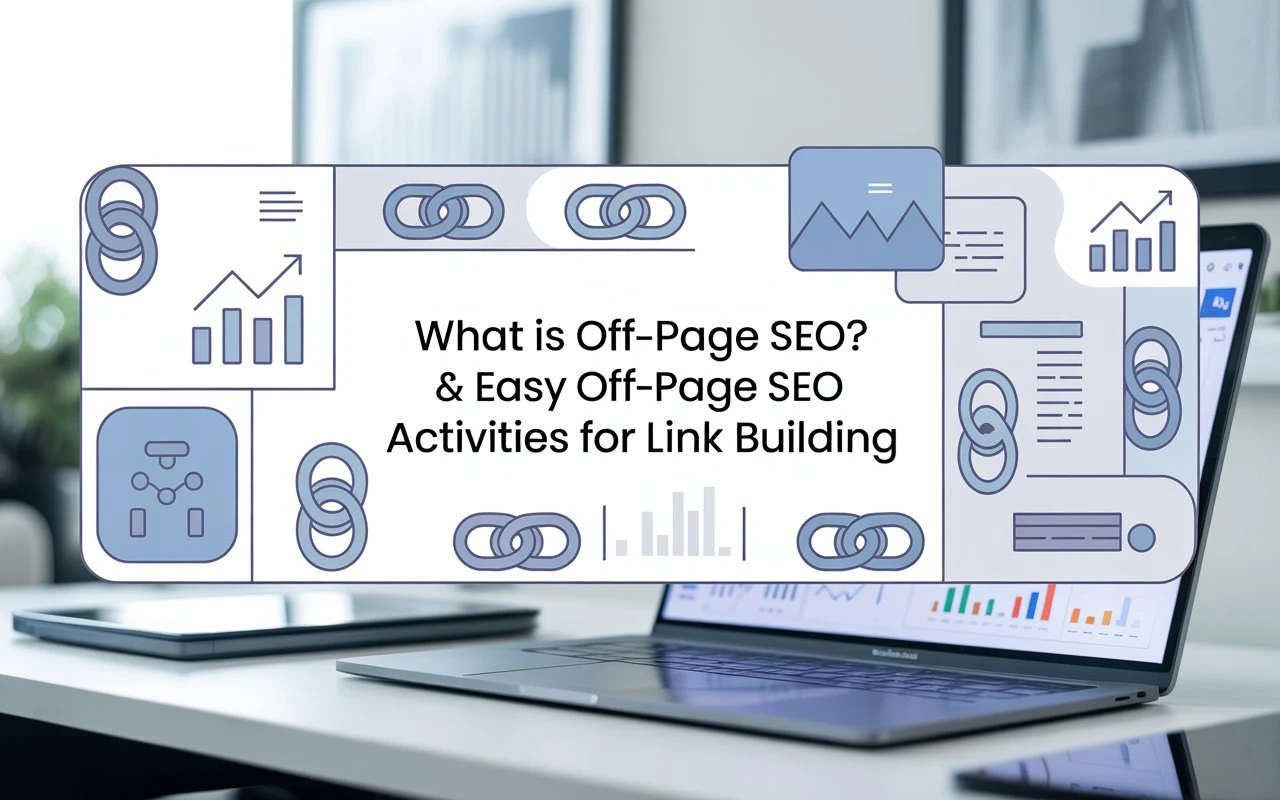
ToggleWhat is Off-Page SEO? & Easy Off-Page SEO Activities for Link Building
If you want your website to rank higher on Google, working only on your website is not enough anymore. What happens outside your website plays a huge role in determining your rankings, authority, and trust.
That’s where Off-Page SEO comes in.
In this blog, you’ll understand what off-page SEO is, why it matters, the easiest link-building activities you can start today, and how to build a smart off-page SEO strategy.
What is Off-Page SEO?
Off-page SEO refers to all the actions you take outside your website to improve its ranking on search engines.
In simple words:
👉 On-page SEO is what you control
👉 Off-page SEO is how others perceive your website
When other websites link to you, mention your brand, or share your content, search engines see it as a signal of trust and authority.
If you’re serious about mastering these concepts, building strong SEO Skills is essential because off-page SEO heavily depends on how well you understand authority and link signals.
The more quality signals you earn, the stronger your website becomes in Google’s eyes.
Why is Off-Page SEO Important?
Search engines don’t just rank content—they rank credibility.
Even if you have great content, you may struggle to rank without off-page signals.
Here’s why off-page SEO matters:
- Builds website authority
- Improves search engine rankings
- Drives referral traffic
- Strengthens brand trust and credibility
Many learners first understand this while enrolling in a digital marketing course, where practical SEO implementation is taught step by step.
Think of it like reputation—people trust what others recommend.
Off-Page SEO Activities for Easy Link Building
If you’re working with a low budget, don’t worry. You can still build a strong off-page foundation using the techniques below.
1. Profile Backlinks
Profile backlinks come from creating accounts on trusted platforms and adding your website link.
These links are usually no-follow, but they are still important.
Why it works:
- Builds your brand presence online
- Creates a basic backlink foundation
- Helps search engines recognize your business
Pro Tip:
Create profiles on relevant platforms and keep your business information consistent everywhere.
2. Social Bookmarking
Social bookmarking platforms help people discover and save useful content.
When you submit your blog there, it can get indexed faster and reach new audiences.
Benefits:
- Faster indexing
- Initial traffic boost
- Good for new websites
Pro Tip:
Always bookmark your new blog posts right after publishing.
3. Forum & Community Posting
Forums and communities are great places to share knowledge and build authority.
Instead of dropping links randomly, focus on helping people.
Why it works:
- Builds trust and credibility
- Connects you with your audience
- Drives targeted traffic
Pro Tip:
Answer questions genuinely, and add your link only when it adds value.
4. Local Citations
If you run a local business, citations are essential.
These are listings on business directories where your business details appear.
Benefits:
- Improves local SEO rankings
- Boosts visibility on Google Maps
- Builds trust
Important:
Keep your Name, Address, and Phone number (NAP) consistent everywhere.
5. Content Syndication
Content syndication means republishing your content on other platforms.
It helps you reach a wider audience.
Why it works:
- Expands your reach
- Drives additional traffic
- Builds brand authority
Pro Tip:
Publish a summary version and link back to your original blog.
6. Influencer Collaboration & Reviews
Working with influencers in your niche can boost your visibility instantly.
They can mention your brand, review your service, or share your content.
Benefits:
- Builds trust quickly
- Generates natural backlinks
- Increases reach
7. Testimonials & Expert Quotes
Providing testimonials to tools or services you use is one of the easiest ways to get backlinks.
Companies often feature them on their websites.
Why it works:
- High success rate
- Builds authority
- Requires minimal effort
8. Image Submission
Uploading images to platforms like Pinterest or design communities can drive traffic and backlinks.
Benefits:
- Helps you rank in Google Images
- Drives consistent traffic
- Improves brand visibility
Pro Tip:
Optimize image file names, alt text, and descriptions.
9. Document Submission (PDF, PPT, DOC)
Sharing documents like guides, presentations, and tutorials on document-sharing sites is highly effective.
Best for:
- Educational content
- Tutorials and guides
- Business presentations
Benefits:
- Quick indexing
- Long-term traffic
- Builds authority
10. Infographic Submission
Infographics are highly shareable and often earn natural backlinks.
People love visual content.
Why it works:
- Attracts backlinks naturally
- Increases social shares
- Improves visibility
11. Video Submission
Video content is one of the most powerful off-page strategies today.
Uploading videos allows you to include links in descriptions and drive traffic.
Benefits:
- High engagement
- Long-term visibility
- Builds strong brand presence
12. Podcast Appearances & Audio Submission
Podcasts are growing rapidly, and appearing on them can give you high-quality backlinks.
Why it works:
- Builds personal authority
- Reaches new audiences
- Generates strong backlinks
Off-Page SEO Strategy (Most Important Part)
Doing random link-building won’t give you results. You need a proper strategy.
To succeed in the long run, you must combine these activities with well-planned SEO strategies that focus on sustainability and authority building.
1. Focus on Quality Over Quantity
A few high-quality backlinks are far more valuable than hundreds of low-quality ones.
2. Maintain a Natural Link Profile
Use a mix of different types of links:
- Profile links
- Social links
- Content-based links
3. Use Anchor Text Variation
Avoid repeating the same keywords. Keep your links natural and diverse.
4. Build Links Gradually
Don’t create too many backlinks at once. It may look spammy.
5. Target Relevant Websites
Links from websites in your niche carry more value.
6. Track and Improve
Regularly monitor your backlinks and identify what works best.
Final Thoughts
Off-page SEO is not a one-time task—it’s a long-term process.
You won’t see instant results, but consistent effort will build strong authority over time.
If you’re just starting out, begin with simple techniques like profile backlinks, social bookmarking, and forum engagement. Then gradually move toward advanced strategies.
Always remember:
👉 SEO is not just about ranking
👉 It’s about building trust and providing value
When you focus on helping users, backlinks will follow naturally.