


Table of Contents
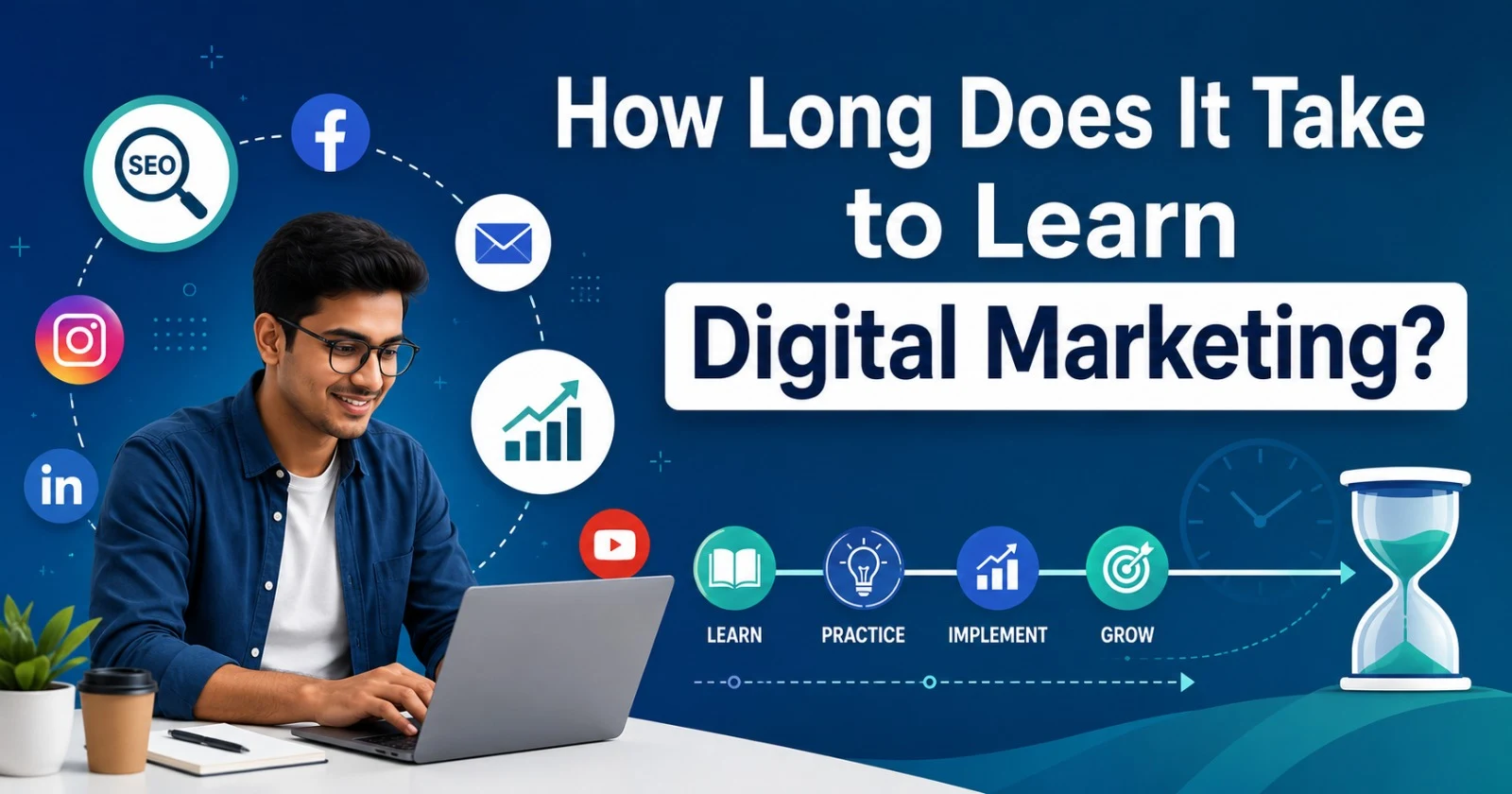
ToggleHow Long Does It Take to Learn Digital Marketing?
If you have typed this question into Google, you are probably standing at a career crossroad. Maybe you are a working professional tired of your 9-to-5 routine. Maybe you are a student who wants a skill that actually pays. Or maybe you already dabble in social media and wonder if it can become a full-time career.
The honest answer is this: you can learn the basics of digital marketing in 4 to 8 weeks, and you can become job-ready in 3 to 6 months. The exact timeline depends on how you learn, how much time you invest daily, and what goal you are chasing. Let us break this down properly, so you can plan your journey with clarity instead of guesswork.
What Does “Learning Digital Marketing” Actually Mean?
Digital marketing is not one skill. It is a collection of skills that work together. When people ask how long it takes to learn it, they usually mean one of three things:
- Understanding the basic concepts (SEO, social media, email marketing, paid ads)
- Becoming skilled enough to run real campaigns independently
- Becoming job-ready or client-ready to earn money from it
Each of these goals has a different timeline, so it helps to know which one you are actually chasing before you start.
Digital Marketing Learning Timeline: Week-by-Week Breakdown
Here is a realistic breakdown for someone learning through structured guidance, not random YouTube videos.
Weeks 1-2: Foundations You learn how digital marketing works as an ecosystem — websites, search engines, social platforms, and how customers move through a buying journey.
Weeks 3-6: Core Skills This is where SEO, social media marketing, content marketing, and email marketing come in. You start creating real content and analysing basic data.
Weeks 7-10: Paid Advertising and Analytics Google Ads, Meta Ads, and Google Analytics require more practice because they involve budgets, targeting, and performance tracking. Most learners need focused practice here.
Weeks 11-16: Specialisation and Live Projects By this stage, you pick a specialisation — SEO, performance marketing, or content strategy — and work on live campaigns or internships to apply what you have learned.
So, in about 3 to 4 months of consistent effort, most learners move from beginner to job-ready. This is why most structured digital marketing courses run for 4 to 6 months, including practical training.
Factors That Affect Your Learning Speed
Not everyone learns at the same pace, and that is completely normal. A few factors decide how quickly you will progress.
Time invested daily Someone studying 2 hours a day will naturally progress faster than someone studying 30 minutes a week. Consistency beats intensity here.
Structured, mentor-led learning is faster than self-study because a trainer corrects your mistakes early, instead of letting you repeat them for months.
Prior exposure to marketing or tech If you already understand basic marketing concepts or are comfortable with tools like Excel or Canva, you will move through the fundamentals faster.
Practical application Reading about SEO and actually optimising a website are two different skill levels. Learners who apply concepts on live projects retain knowledge faster than those who only watch tutorials.
Self-Study vs Structured Course: Which Is Faster?
This is the question most aspirants struggle with. Self-study through free YouTube videos and blogs can teach you concepts, but it rarely teaches you how these concepts fit together in a real campaign. Most self-taught learners take 8 to 12 months to become truly job-ready because they lack structured feedback and real project exposure.
A well-designed digital marketing course in kolkata compresses this timeline significantly. Structured programs combine theory with hands-on tools, live projects, and mentorship, which helps learners avoid common beginner mistakes and build a portfolio faster.
For working professionals especially, structured learning matters even more. You do not have the luxury of trial and error over a year. You need a clear syllabus, deadlines, and accountability, which self-study rarely provides on its own.
How Long Until You Can Get a Job?
If your goal is employment or a career switch, here is a more grounded timeline:
- 3 months: Enough for an entry-level role such as a digital marketing executive or social media coordinator, provided you have completed a solid course with practical exposure.
- 6 months: Enough to apply for mid-level roles if you have built a portfolio with real campaigns, certifications, and internship experience.
- 12 months: Enough to specialise deeply in one area, such as performance marketing or SEO, and command a better salary.
Recruiters in India increasingly prioritise practical skills and portfolios over degrees alone. This means your learning timeline should always include real project work, not just theory. Certifications from Google and Meta help, but employers want to see that you can actually run a campaign, analyse the data, and explain your decisions.
Why Structured Training Works Better for Career Changers
Career changers face a unique challenge. You are not just learning a new skill; you are also unlearning old work habits and building confidence in an unfamiliar field. This is where guided, classroom-style training helps more than solo learning.
A structured environment gives you deadlines, peer accountability, doubt-clearing sessions, and industry-relevant assignments. It also connects you with placement support and internship opportunities, which matter a lot when you are trying to break into a new field without prior experience on your resume.
Before committing time and money to any course, it is worth understanding whether this career path suits your long-term goals. Read our detailed guide on Is Digital Marketing a Good Career in 2026 to evaluate growth prospects, salary trends, and skill demand before you begin your learning journey.
Final Thoughts
There is no single, universal answer to how long digital marketing takes to learn, because it depends on your starting point, your goals, and how seriously you commit to the process. What is certain is this: with 3 to 6 months of focused, structured learning, most people in India can go from complete beginner to job-ready professional. The key is choosing the right learning path, staying consistent, and applying every concept through real projects rather than passive watching. Your timeline starts the day you decide to begin, not the day you feel fully ready.