
Table of Contents
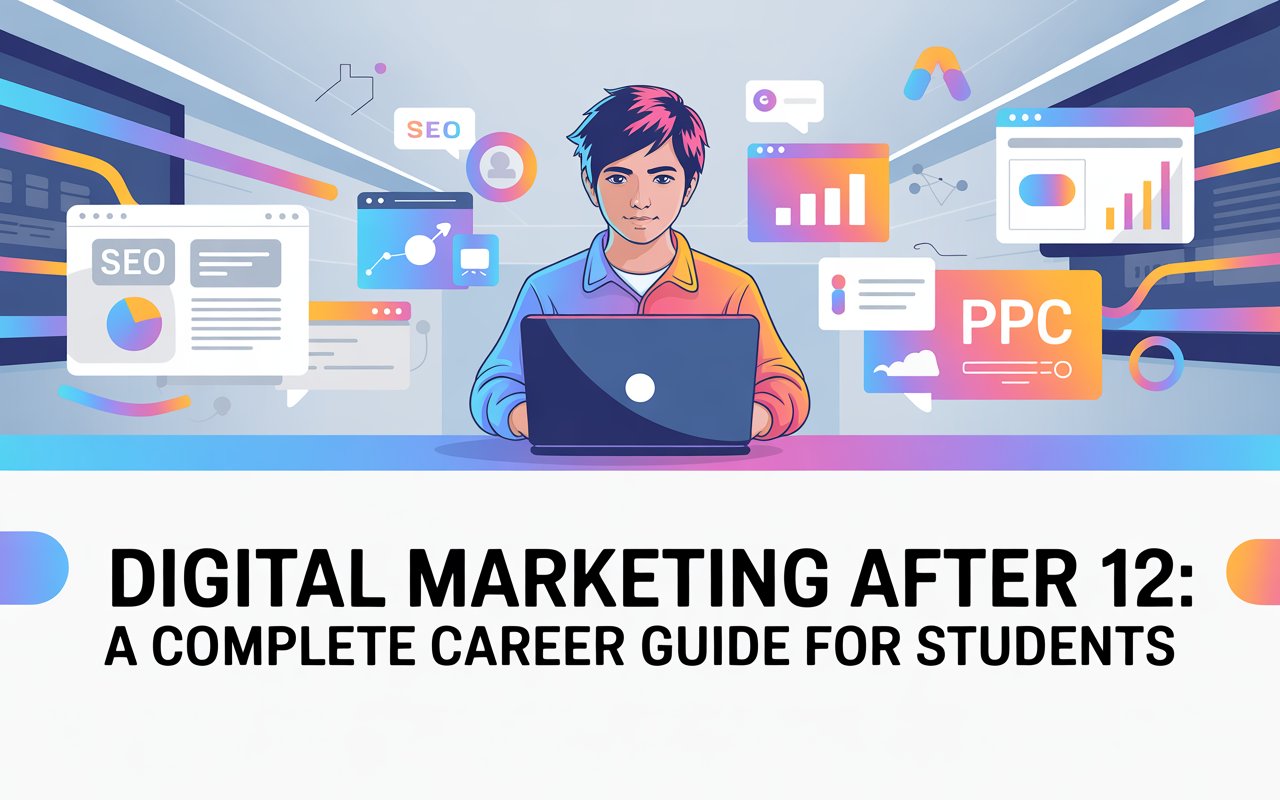
ToggleDigital Marketing After 12: A Complete Career Guide for Students
If you’re wondering whether this field is worth pursuing, read our honest answer on is digital marketing a good career. Choosing digital marketing after 12 is a smart decision for students looking to start a career quickly with abundant growth opportunities. This field offers diverse roles, creative freedom, and the chance to earn while learning. This guide covers everything a student must know before enrolling in a digital marketing course, including eligibility, job prospects, course selection, and common pitfalls to avoid.
Why Choose Digital Marketing After 12?
- No technical degree required; open to students from any academic stream.
- Rapidly growing industry with high demand across sectors such as e-commerce, healthcare, education, and startups.
- Flexible learning: both online and offline courses in various durations.
- Opportunity to start freelancing or internships right after course completion.
- Strong foundation for entrepreneurship with practical and tech-enhanced skills.
For students in Kolkata, selecting the right digital marketing Institute in Kolkata can ensure hands-on training, live projects, and excellent placement support to launch your career effectively.
Common Pitfalls to Avoid
When choosing a digital marketing course, it is important to be aware of the top mistakes when picking digital marketing courses. Many students make the error of prioritizing course fees over practical learning, ignoring whether the course offers hands-on projects with real tools like Google Ads and Google Analytics. Additionally, not verifying the trainers’ industry experience or overlooking course curriculum updates can lead to outdated knowledge that limits job prospects. Trusting unrealistic job placement guarantees and skipping genuine student feedback are also common mistakes that can cost time and money.
Is Digital Marketing a Good Career Option After 12th?
Yes, digital marketing is an excellent career path after 12th because it offers fast skill acquisition, job flexibility, and high earning potential. Digital skills are required in all industries, making this a versatile and future-proof choice.
Eligibility to Pursue Digital Marketing After Class 12
- Completion of 12th standard from any recognized board is the main eligibility criterion.
- No mandatory minimum marks for most certificate and diploma courses.
- For degree programs like BBA or BA in Digital Marketing, some institutes may require minimum passing marks.
Can I Start Earning from Digital Marketing Right After 12th?
Absolutely. Students can start earning by:
- Freelancing in content writing, social media management, SEO, and PPC.
- Applying for internships in agencies or startups to get practical experience.
- Taking up entry-level roles such as Digital Marketing Executive or Social Media Assistant.
Best Digital Marketing Course Options for Students After 12th
| Course Type | Duration | Fees (INR) | Ideal For |
|---|---|---|---|
| Certificate | 2–3 months | 15,000–25,000 | Beginners, quick skill |
| Diploma | 4–6 months | 30,000–50,000 | Job seekers, hands-on |
| Degree (BBA, BA) | 3 years | 60,000–1,00,000 | Long-term career |
| Fast-track (Crash) | 30–45 days | 10,000–20,000 | Working students |
Recommended courses focus on SEO, PPC, social media marketing, content creation, email marketing, and analytics. Industry-relevant certifications from Google, HubSpot, and other reputed providers add value.
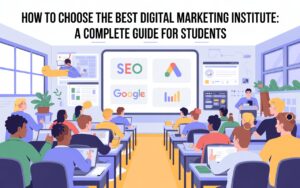
How to Choose the Best Digital Marketing Institute After 12th
Knowing which type of course to pursue is only half the decision. The other half — and arguably the more important one — is choosing the right institute to learn it from. As a student fresh out of class 12, you may not yet know what separates a genuinely good institute from one that simply markets itself well. Here are the key factors to evaluate before you enrol.
Check if the curriculum is updated for 2026. Digital marketing evolves rapidly, and an institute still teaching only Facebook Ads and basic SEO — without covering AI tools, short-form video strategy, or Google’s latest ad formats — is setting you up with a toolkit that is already becoming outdated. Ask directly: “Has the course content been updated in the last six months?”
Prioritise hands-on training over recorded lectures. The fastest way to become job-ready is to actually run campaigns, not just watch someone else explain them. Look for institutes that offer live projects, real tool access (Google Ads, SEMrush, Canva Pro), and assignments based on actual client scenarios. A certificate from an institute that gave you real-world practice is worth far more to a recruiter than one from an institute that only delivered slide presentations.
Verify the trainer’s active industry experience. Your trainer should be someone who currently works with brands or manages live campaigns — not someone whose experience stopped five years ago. Ask to see a recent campaign case study or client result before you commit.
Look at placement support honestly. Many institutes promise placement assistance, but there is a significant difference between “we send your resume to our network” and “we prepare you with mock interviews, portfolio reviews, and active recruiter connections.” Ask for specific company names where recent batches were placed, and ideally speak to one or two alumni directly.
Compare the full cost, not just the fee. Factor in certification exam fees, tool subscriptions, and any materials not included in the base price. A slightly higher fee at an institute that covers Google Ads certification prep and premium tool access often works out cheaper than a low-fee course where everything is extra.
Choosing the right institute is a decision that directly shapes your first job, your starting salary, and the speed of your career growth. If you want a detailed breakdown of every factor to evaluate — including warning signs to watch out for and a comparison framework — read our comprehensive guide on how to choose the best digital marketing institute before making your final decision.
How Long Does It Take to Learn Digital Marketing?
- Certificate courses: 2–3 months
- Diploma courses: 4–6 months
- Degree courses: 3 years
- Fast-track courses: 1–2 months
Most students become job-ready within 3 to 6 months with consistent learning.
Is Digital Marketing Difficult for Beginners with No Technical Background?
Digital marketing is beginner-friendly. Courses teach from basics such as content writing, social media management, and SEO, progressing to advanced skills including data analytics and paid advertising. No coding or prior technical knowledge is required.
Job Roles After Completing a Digital Marketing Course
- Digital Marketing Executive
- SEO Specialist
- Social Media Manager
- Content Writer / Blogger
- PPC Analyst
- Email Marketing Specialist
- Data Analyst
- Freelancer
These roles are available across multiple industries and startups.
Can I Pursue Digital Marketing Along with My College Degree?
Yes, many students pursue digital marketing courses online or during weekends alongside their college studies. This dual approach enhances skills while continuing formal education.
Salary Expectations for 12th-Pass Students in Digital Marketing
- Entry-level salary: ₹1.8 to 3.5 lakh per annum
- Freelancers can earn ₹10,000 to 25,000 per month initially.
- With experience and skill upgrade, salary and freelancing income increase significantly.
Is Freelancing a Good Option for Students After 12th?
Freelancing is ideal for students to gain practical experience, flexibility, and build a portfolio. Roles suited for freelancers include content writing, social media management, SEO, and PPC campaign handling.
Frequently Asked Questions (FAQs)
Yes, it offers quick skill development, flexibility, and growth opportunities.
Completion of 12th from any recognized board is sufficient for most courses.
Yes, freelancing and internships can start early for practical experience and earnings.
Certificate and diploma courses focused on SEO, PPC, social media, content marketing, and analytics.
Typically 2 to 6 months for most certificate or diploma courses.
No, courses are beginner-friendly and teach step-by-step.
SEO specialist, social media manager, digital marketing executive, content writer, PPC analyst, email marketer.
Yes, flexible course options allow concurrent study.
Entry-level salaries range around ₹1.8–3.5 lakh per annum.
Yes, it offers practical experience, flexibility, and income opportunities.
Final Thoughts
Making the wrong choice in a digital marketing course can cost you time, money, and motivation. To avoid traps and confusion, follow the tips in this article. The right course will not just give you a certificate—it will equip you for real career growth.
Don’t rush your decision. Compare, research, and speak with real alumni before you invest. Your future as a digital marketer depends on this choice.